

September 16, 2023
It is abundantly clear that God’s salvation by grace is not earned by
human works. However, certain works are legitimately generated and
must be evaluated to ensure believers are producing according to God’s
purposes.
For it is by grace that you are saved through faith; and that not of
yourselves: it is the gift of God: Not of works lest any man should
boast (Ephesians 2:8,9).
It is not by works of righteousness which we have done, but according
to his mercy he saved us, by the washing of regeneration, and
renewal of the Holy Spirit; which he shed on us abundantly through
Jesus Christ our Savior (Ephesians 3: 5,6).
It should be noted however, that good works are an important part of
God’s purpose for every believer that is, if the works are conducted
under certain conditions! One condition is that love must be the
motivating essential if any works are to count as God approved and
acceptable production. It was only after Peter had confessed his love
for Him that Jesus commissioned him to feed His lambs and sheep. The
church at Ephesus was warned that unless it returned to its first love its
candlestick would be removed. Therefore, if works are to be acceptable
to Him, they must spring from love for Him.
Love becomes the motive for all service for God. This is the reason Paul
commends believers at Thessalonica for their labor of love.
Remembering without ceasing your work of faith, and labor of love
and patience of hope in our Lord Jesus Christ, in the sight of God and
our father (1 Thessalonians 1:3).
Do we love Him, if so, why? What is the prime driver in the Christian
way of life? He is the model; He did something we have not and cannot
do. He first loved us and expressed his full love in His death for all
unbelievers. (That’s you and me, as we were). This true love from Him
draws us close to Him and serves as the driving force in all of our
service. This was Paul’s motive and is expressed as follows: For the love
of Christ constrains us (2 Cor. 5:14, and walk in love as Christ also has
loved us and has given himself for us (Ephesians (5:2).
Love must be the prime driver for all things done in response to His
marvelous Grace. Love emanates from the fruit of the spirit and
certainly not from the energy of the flesh. Love can only come from the
believer as a result of being controlled by the energizing power of the
Holy Spirit.
For the fruit of the spirit is LOVE, joy, peace, long-suffering, gentleness
goodness, faith, meekness, temperance: against such there is no law
(Galatians 5:22,23).
All that God does in grace is because of His infinite love; all that comes
from Him is unmerited and given freely. The believer’s response to this
amazing provision cannot be by the performance of any duty because
no condition accompanies the offer of God’s free gift except grace
through faith. A response to His grace cannot be to gain the favor of
God because grace is absolutely unmerited favor. What God favors no
human can dis-annul. If it were necessary to do anything to assure a
believer’s final salvation that which is done would be for personal gain
and would not be motivated by love. The fact that under grace God
gives all things freely of necessity excludes every other motive but love.
It should be of no surprise to learn that all things done apart from love
has no value in the sight of God. If I speak with the tongues of men and
of angels, but have not love, I am become as sounding brass, and a
tinkling symbol (1 Corinthians 13:1).
Because of the essential need for love in good works Paul prayed that
believers being rooted and grounded in love, may be able to
comprehend… what is the breath, and length, and depth, and height:
And to Know the love of Christ, which passes knowledge (Ephesians
3:17-19).
Please be warned that one of the most ineffectual and sinister
influences for Christian service and duty is fear. Fear of God’s
vengeance or of being lost or cast out forever unless certain functions
of life (often man-made) are maintained are improperly used as
motivators. This false system may take the form of fear of supposed
punishment or purging as a condition for final entrance into heaven.
This misplaced motivation is used to restrain people from doing that
which is wrong or to encourage them to perform good deeds or make
contributions to the church. While not always recognized or realized
much of this activity is offered as an appeasement or leniency from
God. However, fear has no place to rest in the Christian way of life,
because… To the extent we surrender to our fears, to that same degree
we perpetuate the fears. When we perpetuate the fears, we expand
the capacity to fear even more. When the capacity to fear is increased
the power of fear increases also. When the power of fear is increased,
we tend to live by fear. When we live by fear we tend to be intimidated
by life itself.
Fear is the dominant motive in many world religions because they know
little about the love of God that resides in the Lord Jesus Christ.
However, fear is often a motive in the lives of many Christians who do
not fully understand God’s love and His grace for their lives.
Fear can become the desire to avoid that which can cause harm and is a
natural feeling that is produced by the instinct of self-preservation. Self-
preservation depends upon self to preserve, but grace is seeing God’s
great love and the need to place trust and dependence in Him and not
in self through self-preservation.
The scriptures teach that fear should find no place in the life of a
believer.
For God has not given us the spirit of fear; but of power, and of love,
and of a sound mind (2 Timothy 1:7).
Herein is our love made perfect, that we may have boldness in the
day of judgment because as he is, so are we in the world. There is no
fear in love, but perfect love casts out fear because fear has torment.
He that fears is not made perfect in love (1 John 4: 17, 18).
Because the motive for our service is love, that service must be
voluntary. That which is done because of love is never done grudgingly
or of necessity and surely not because of any compulsion except what
springs from an inner desire to serve.
This may be surprising but a believer’s labor of love does not assume
the role of a servant for His master. In His farewell discussion with His
disciples, Jesus said,
Henceforth I call you not servants… but I have called you friends (John
15:15).
This perfect friendship does not measure the volume of labor produced
nor does it expect payment in return. It is without any thought of gain
or reward. The difference between the work of a servant and a friend is
well expressed in the following words: but now we are delivered from
the law… that we should serve in newness of spirit, and not in the
oldness of the letter (Romans 7:6).
This newness of spirit had a deep meaning for the Apostle Paul and he
said, but none of these things (bonds and afflictions that he faced at
Jerusalem) move me, neither count I my life dear unto myself, so that
I might finish my course with joy, and the ministry, which I have
received of the Lord Jesus, to testify the gospel of the grace of God
(Acts 20:24).
The identical spirit was found in the churches of Macedonia when in a
great trial of affliction, the abundance of their joy and their deep
poverty abounded unto the riches of their liberality (2 Corinthians
8:2).
Our true labor of love is not only voluntary service but it is also joyful.
True service in grace must be voluntary and from one’s volition.
Inasmuch as grace freely gives everything, out of the influence of God’s
love, anything that the recipient of grace does for God must be of his
desire and not out of duty to acquire, earn, or deserve.
All admonitions in the epistles are in words that clearly denote a
voluntary response. Beseech was a word that was commonly used by
Paul, John, and Peter. I beseech you…. that your present your bodies
(Romans 12:1). I Beseech you… that you all speak the same thing, and
that there be no divisions among you (1 Corinthians 1:10). We
beseech you that you study to be quiet … to work with your own
hands… that you walk honestly (1Thessalonians 4:10-12).
The word beseech is free from any manner of compulsion, and it is
clear from the fact that it has always been used in addressing God. We
beseech you; O Lord God is an appeal for voluntary response from Him.
God uses the very same word in His appeals to believers to live in a
manner that is pleasing to Him.
Two other words are frequently used such as exhort and admonish.
These words may sound more authoritative than beseech, but they
clearly call for voluntary compliance and exclude the element of
compulsion.
A more common expression used is the word LET. This word also
implies freedom of will to comply or not comply.
For example: Let not sin therefore reign in your mortal body (Rom.
6:12). Let us not be desirous of vain glory (Gal. 5:26). Let us not be
weary in well doing (Gal. 6:9). Let him that stole steal no more (Eph.
4:28). Let all bitterness and wrath and anger be put away from you
(Eph. 4:31). Let the word of Christ dwell in you richly (Col. 3:16).
In all of these references the appeal is for voluntary compliance.
It is clear that our Lord does not seek a forced, slavish, or coercive
service. He desires a voluntary and joyous labor of love that issues from
the very core of our being.
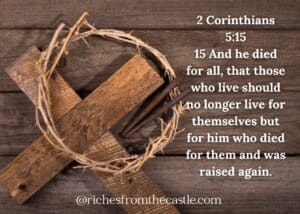
Good works are not only voluntary and joyful but must be motivated by
love and unto Christ to be acceptable unto God. Christ died that they
which live should not henceforth live unto themselves, but unto Him
which died for them and rose again (1 Corinthians 5:15). Whatsoever
you do, do all to the glory of God (1 Corinthians 10:31). And
whosoever you do in word and in deed, do all in the name of the Lord
Jesus (Colossians 3:17).
The admonition for works is not only that they should be done unto the
Lord Jesus Christ but also that they are not to be done as unto men.
And whatsoever you do, do it heartily, as to the Lord, and not unto
men… for you serve the Lord Christ (Colossians 3:23,24).
These words written to slaves concerning their service for human
masters, make it clear that every detail of a believer’s work, though
performed for the benefit of others, should always be accomplished as
unto Christ.
It follows that much so-called Christian activity cannot be acceptable
unto God because if the human activity does not measure up to the
foregoing tests; it cannot be honored by God.
If the alleged service is done for personal preferences or because of a
desire for recognition or attention, that service is null and void. Is it well
known that selfish motives are operative, in a clandestine way, in many
church activities. Many young people and church workers may mean
well but too many have not learned the difference between the
production of human good versus divine good. God alone knows what
is actuated by the love of Christ and is a voluntary labor of love for Him
and is unto His glory.
Only if an active believer serves to the honor and glory of Jesus Christ
by means of the controlling power of the Holy Spirit is the labor
classified as divine good and will be acceptable unto God. It is not so
much what we do, it is who (The Holy Spirit) controls us when it is
performed or accomplished. All works performed by unbelievers are
human works and will never be classified as divine good and will
forever be rejected by our righteous God. These works will not provide
or sustain eternal life as Jesus said near the sea of Galilee when asked
by an inquirer…
Then said they to Him, what shall we do, that we might work the
works of God (John 6:28)?
His response was…
This is the work of God, that you believe on Him whom He has sent
(John 6:29).
This is the very essence of salvation… that is, to believe on Jesus Christ.
He is the exclusive and only way to Heaven… believe this message that
is directly from Jesus Christ and place all of your faith in Him personally.
If you truly trust Him and deposit all of your faith in Him… you will be
the recipient of eternal life.
Verily, Verily I say unto you, He that believeth on me has everlasting
life (John 6:47).
Believe on Him, trust in Him and He will receive you and give you the
gift of eternal life.
But as many as received Him, to them gave He power to become the
sons of God, even to them that BELIEVE on His name (John 1:12).
Neither is there salvation in any other: for there is none other name
under heaven given among men, whereby we must be saved (Acts
4:12).
